What is bioresonance testing?
BioResonance testing is a system designed as an information tool to help evaluate or assess a client. The simplest way to describe it is as asking the body a question and getting the response directly from physiology, rather than from conscious thought.
It is not a diagnostic medical test and we don’t present it as one. What it gives us is a starting picture — a set of areas worth paying attention to — which we then talk through with you alongside everything else you’ve told us.
How it works
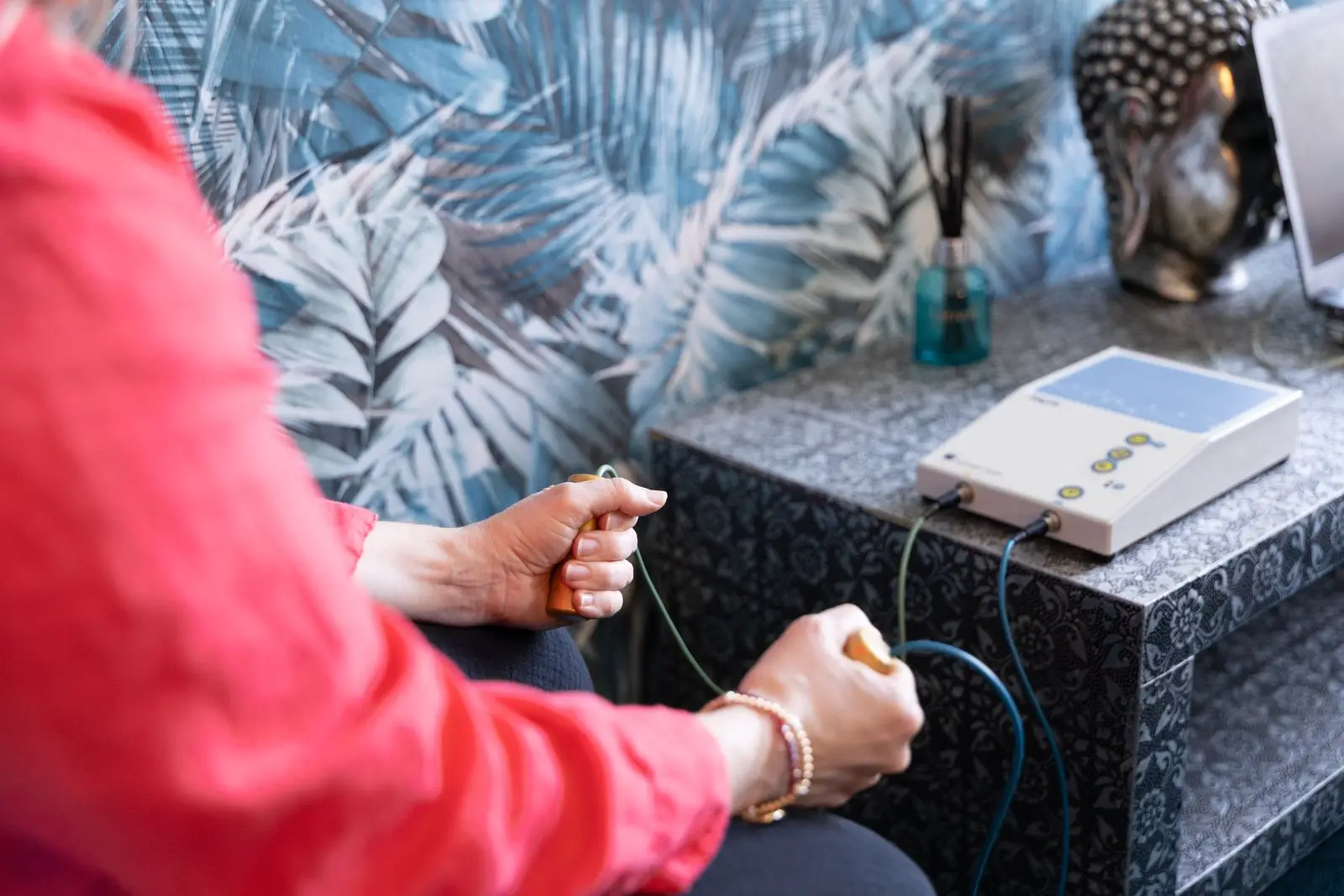
We use the Asyra system, which outputs digitally encoded information relating to a wide range of mental, physiological and emotional factors as electromagnetic signals. You hold two brass probes while small changes in the electrical resistance of the skin are recorded, and the software analyses those responses to generate reports.
It is entirely non invasive. You sit comfortably in a chair holding the probes while the various tests run. There are no needles and nothing is taken from you.
What can be assessed
The system covers a broad range of categories, including organ function, nutritional status, toxicity, food and environmental sensitivities, hormonal profiles, mineral levels, dental issues, emotional stressors, heavy metals and herbs, among others.
For many clients this is where a plan starts. It isn’t a required first step for everyone — plenty of people come straight in for a specific therapy — but if you’re not sure where to begin, it’s a sensible place to look.
Benefits
What to expect
Before
Come as you are. It’s helpful to have a think beforehand about what’s prompted you to book and anything you’ve already tried.
During
You sit comfortably in a chair and hold two brass probes, one in each hand, while the practitioner runs a series of tests. It’s completely painless and you can talk throughout.
The report
The software generates reports from your responses. Your practitioner will take you through what came up and what, if anything, is worth acting on.
Remote testing
If you can’t get to Gateshead, remote testing is available. Get in touch and we’ll explain how it works and what we need from you.
Who it’s often used for
People come to us about all sorts of things. These are the ones that come up most often with this treatment — if yours isn’t listed, ask us.
Who it’s not suitable for
Testing is not suitable for people with a pacemaker, or with an epilepsy device that uses batteries.
We advise against testing pregnant women in the first trimester. Testing is otherwise considered safe for babies and children.
BioResonance testing is a complementary assessment tool. It is not a medical diagnosis and it does not replace investigations, tests or advice from your GP.
BioResonance Testing FAQs
Is this a medical diagnosis?
No. It’s an information tool that helps us build a picture and decide where to focus. It doesn’t replace anything your GP does, and if something in your history warrants a medical opinion we’ll say so.
Does it hurt?
Not at all. You sit in a chair and hold two brass probes while the tests run. There are no needles and nothing is taken from you.
Can it be done remotely?
Yes. Bioresonance testing is available both in house and remotely, depending on what suits you. Contact us and we’ll walk you through the remote process.
Can children be tested?
Yes. Testing is considered safe for babies and children. It isn’t suitable for anyone with a pacemaker or a battery powered epilepsy device, and we advise against it in the first trimester of pregnancy.
How long does it take?
Around 60 minutes, including time to go through the results with you properly.
The treatments described here are complementary therapies intended to support general health and wellbeing. They are not a substitute for medical diagnosis or treatment, and nothing here should be taken as a promise of a particular outcome. If you have a health concern, please speak to your GP, and never stop or change prescribed medication without their advice.