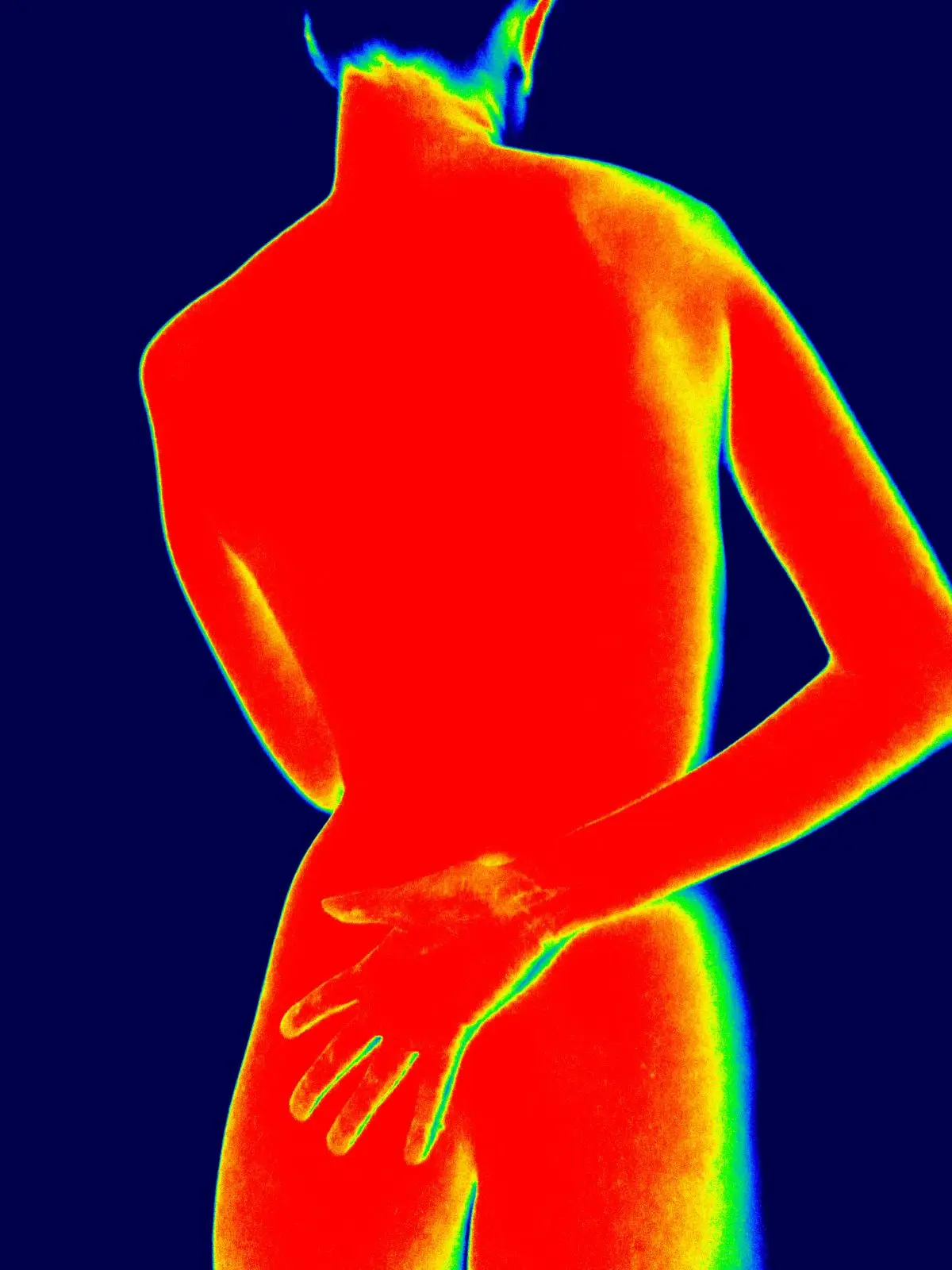
What is thermography?
Thermography, or digital infrared thermal imaging, uses a sensitive camera to record the heat given off by the surface of the body. Areas of inflammation, altered circulation or nerve irritation often show as asymmetries in that heat pattern.
It involves no radiation, no compression and no contact of any kind. The camera simply records what your body is already emitting, from a few feet away.
What it is and isn’t
Thermography is a functional imaging tool: it shows patterns of activity, not structure. It cannot see inside the body the way an X-ray, ultrasound or MRI can, and it cannot diagnose anything on its own.
Where it earns its place is in screening and in monitoring change over time. Because it is quick and harmless to repeat, a baseline scan followed by comparison scans can show whether a pattern is shifting — which is often the useful question.
Images are interpreted and reported on, and your practitioner will go through the report with you. Anything that warrants a medical opinion, we will tell you to take to your GP.
Benefits
What to expect
Preparing
There are preparation instructions we’ll send before your appointment — they cover avoiding exercise, hot showers, deodorant, lotions and stimulants for a set period beforehand. Following them properly matters, because all of these change your surface temperature.
Acclimatising
You’ll undress to the area being imaged and sit in a temperature controlled room for around fifteen minutes so your skin settles to a stable baseline. This is part of why the appointment takes around two hours.
The scan
You stand in a series of positions while the camera records. It takes a few minutes and nothing touches you.
The report
Images are reviewed and reported, and your practitioner will talk you through the findings and what, if anything, is worth following up.
Who it’s often used for
People come to us about all sorts of things. These are the ones that come up most often with this treatment — if yours isn’t listed, ask us.
Important
Thermography is a screening and monitoring tool. It is not a diagnostic test and it is not a replacement for mammography, ultrasound, MRI or any other imaging or screening your doctor recommends.
It cannot rule anything out. If you have a symptom that concerns you — a lump, a change, persistent pain — see your GP. Please do not use a thermography result as a reason to delay that.
Thermography FAQs
Is it safe?
Yes. The camera is entirely passive: it records heat your body is already giving off. There is no radiation and no contact.
Can it replace a mammogram?
No, and we would never suggest it. Thermography is a functional screening tool that shows heat patterns; it does not show structure and it cannot rule anything out. It does not replace any screening your doctor recommends.
Why is there so much preparation?
Because almost everything changes your skin temperature — exercise, a hot shower, coffee, deodorant, moisturiser. Following the instructions is what makes the images worth reading.
How often would I repeat it?
A baseline followed by a comparison scan a few months later is a common pattern, since the useful information is often in the change rather than a single image. Your practitioner will advise.
The treatments described here are complementary therapies intended to support general health and wellbeing. They are not a substitute for medical diagnosis or treatment, and nothing here should be taken as a promise of a particular outcome. If you have a health concern, please speak to your GP, and never stop or change prescribed medication without their advice.